
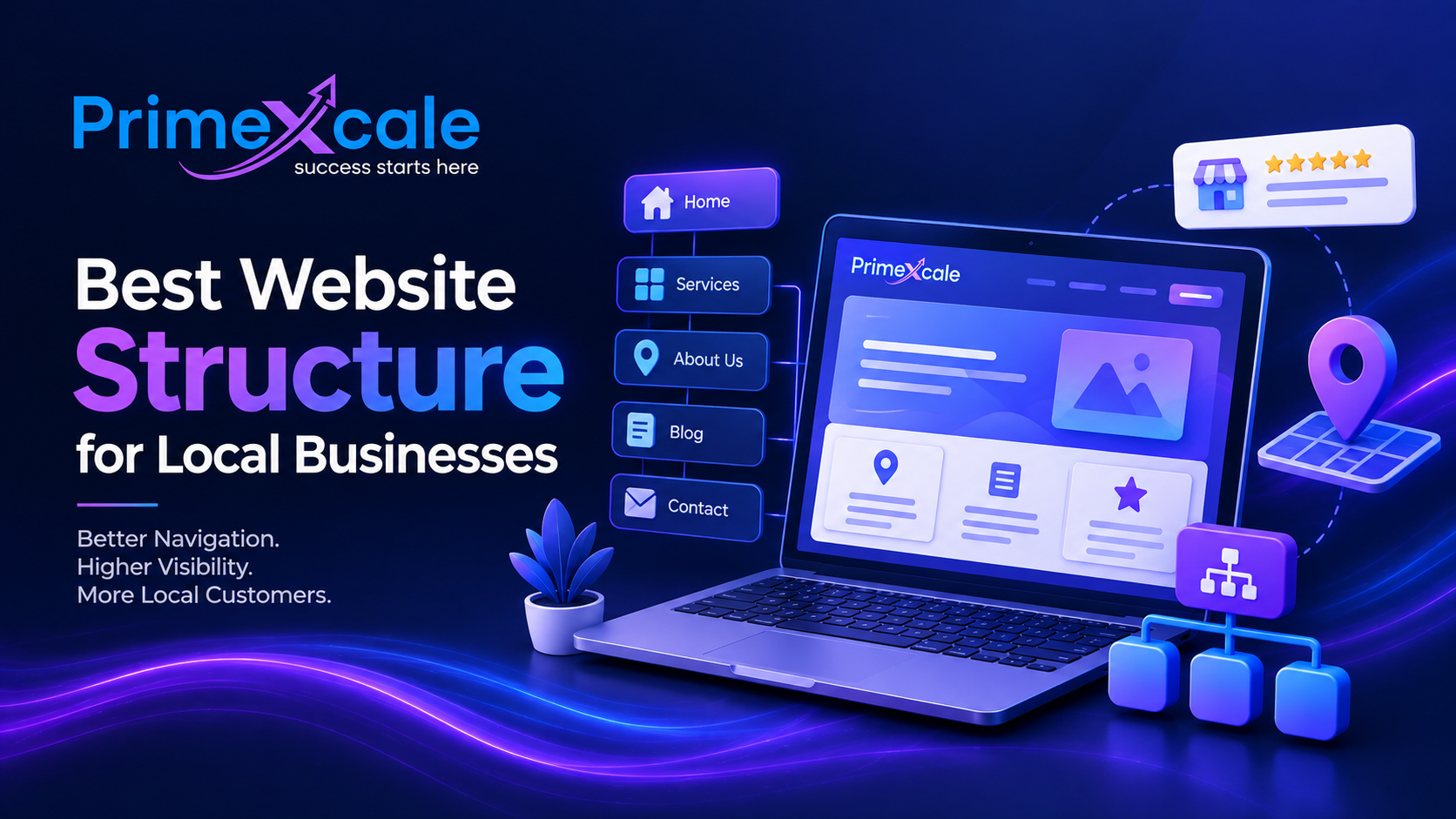
A local business website is more than a place online. It should help people quickly learn what the business does, what services it provides, where it is located and how to get in touch. A website that is organised well makes it easy for people to find the information they need. It also helps search engines understand what the website is about and how the different pages are connected.
The content needs to be made for people. Of writing just to get higher rankings or use certain words focus on giving visitors helpful and unique information. Service pages that are clear details about the location contact information, links inside the website and real experience from the business should be the things to focus on.
A website that works well on phones is also important because many local customers use their phones to look for businesses. That is why choosing the way to structure a website for local businesses means making a website that is simple, helpful and easy to use.
Why Website Structure Matters for Local Businesses
A good website structure makes it easy for visitors to find the information they need without getting confused. For example, a person looking for SEO services should reach the SEO services page quickly not wander through a homepage.
Each major service should have its page that is organized logically. The website should also clearly show the business location contact details and the areas where service is offered.
Navigation and internal links link pages together and help users move naturally through the website. They also help search engines see how pages are related.
Poor navigation, duplicate pages and confusing website structures can make a site hard to use. Of adding too many pages or repeating keywords businesses should focus on building a useful and easy‑to‑navigate website.
Ideal Website Structure for a Local Business
A simple structure could look like this:
Home → Services → Individual Service Pages → About → Location/Service Areas → Contact
It is easy for customers and search engines to understand the structure.
Homepage
The homepage must clearly introduce the business. Explain its main services. The homepage should also mention the location or service area and include a natural call to action such, as “Call Us ” “Get a Quote ” or “Book an Appointment.”
The homepage should show trust signals. These trust signals can include testimonials, experience, certifications or real business information. The homepage should also link to important service pages so visitors can learn more.
Service Pages
Every major service should have its own useful page. Explain what the service is, who needs it, what the business does, and how its process works.
For example, a business providing web site services could describe web site planning, design, development, maintenance and support on appropriate pages. Local relevance can be included naturally instead of repeating the same city keyword again and again.
About Page
The About page should tell the real story of the business. Include its background, team experience, skills, values, and approach.
Real first-hand experience is especially useful because it helps customers understand who they are dealing with and why they should trust the business.
Contact Page
The Contact page should make communication simple. Include the phone number, email address, contact form, business address where applicable, opening hours, Google Maps information, and a clear enquiry or appointment option.
Create Location-Focused Pages Without Keyword Stuffing
Location pages can be helpful when a business truly operates in areas.. Each page must offer something real and useful to the reader.
For instance if a company provides SEO services in Jaipur it’s fine to use phrases like “SEO Company in Jaipur” or “Website development in Jaipur”. Long as these services are actually available there.
Avoid making hundreds of location pages by changing the city name. That doesn’t add value. Instead each page should include details about the services available, in that location what local customers need and how the business meets those needs.
The keywords should appear naturally within the content. Don’t repeat the phrase over and over. That makes the page hard to read. Doesn’t help the customer experience. Keep it clear, helpful. Focused on the local audience.
Build a Clear Navigation & Internal Linking Structure
Navigation should be simple and consistent. Homepage should make it easy to find key service pages.
Use contextual internal links to related services where they really help the visitor. For example, a website development page may link to an associated SEO service page.
Breadcrumbs can also be useful for websites. Breadcrumbs show where the user is, on the site. Anchor text should be descriptive and natural, not vague links such as “click here.”
Don’t create internal links just for SEO. The main goal should be to improve the user journey and to help people reach useful information with fewer clicks.
What Information Should Every Local Business Website Include?
I believe a practical local business website should normally include:
Homepage: Business overview, main services, location and CTA.
Services-The details should completely cover every service.
About- The business’s story, team’s expertise and the business’s core values
Location- The location details and which localities it covers
Contact: Phone number, email address, form, address and opening hours.
Testimonials: Real customer stories
FAQs: Easy answers, to questions.
Blog: Useful, relevant and original posts.
Testimonials and business claims must be true. Always!
Technical Elements That Support a Strong Local Website Structure
your local website should work well on devices and use secure HTTPS browsing.Pages should load quickly, important pages should be accessible to search engines and URLs should be clean and descriptive.
Use the correct title tags, meta descriptions, heading structure and descriptive image alt text when appropriate. An XML sitemap can also help Google find important URLs. If the structured data does not match information visible on the page it will not be useful.
Businesses can use Google Search Console to monitor indexing, search performance and technical issues. Google advises checking Search Console after major template or code changes and monitoring performance on a regular basis.
How to Structure Content for Google Search & AI Search Experiences
Content must be written for people not only for search engines. Give visitors information that comes from business experience, useful examples, clear processes and genuine local knowledge.
AI tools can help with writing. Content should not be published without human review originality and added value. Google warns against creating amounts of unoriginal content mainly to manipulate search rankings.
Answer real customer questions directly and organise information with clear headings, short paragraphs, lists, and useful explanations.
There is no separate “magic formula” for AI Overviews or AI Mode. Google’s current guidance says strong SEO fundamentals still matter for generative AI search experiences.
Businesses should also avoid publishing third-party content mainly to use another website’s reputation for ranking. Google’s current site reputation policy specifically addresses this practice.
Common Website Structure Mistakes Local Businesses Should Avoid
Common errors include: putting all of the services on one generic page, keyword stuffing the city name in an unnatural way, creating near-duplicate location pages, and hiding important service pages from navigation.
“Don’t hide contact information, post fake reviews, make baseless claims, duplicate content and write only for search engines,” said the business.
Old service information, prices, addresses and opening times can also harm the customer experience. Too many pop-ups and confusing navigation makes the website harder to use, especially on mobile devices.
Recommended Website Structure for a Jaipur Local Business
A example could be:
Home
→ About Us
→ Services
→ SEO Services
→ Website Development
→ Digital Marketing
→ Jaipur / Service Areas
→ Blog / Resources
→ Contact Us
This structure is a good example but every business must tailor its website to match its own services, customers and locations. Not every local business requires the pages.
The main goal is simple: make the website easy for real people to understand and use. When useful content, clear navigation, genuine local information and a logical page structure work together website becomes more useful, for customers. Easier for search engines to understand.